
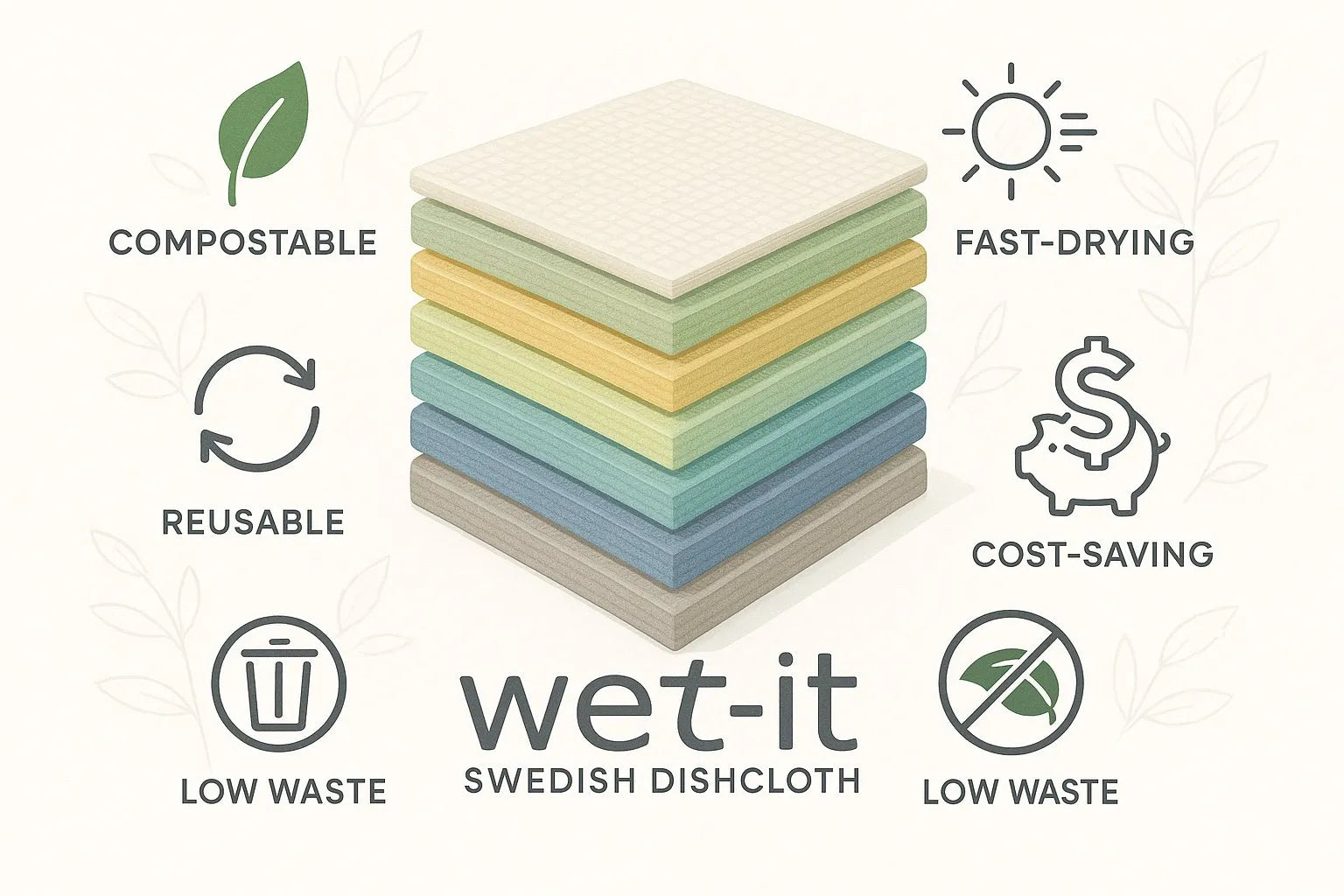
Swedish Dishcloths vs. Paper Towels and Sponges
Cleaning a kitchen can feel never-ending. Spills, crumbs, sticky spots, and greasy dishes show up every single day. Many homes use paper towels for these jobs. Others use kitchen sponges. A growing number of families have started using Swedish dishcloths.
Each option can clean a mess, but they are not the same. There are big differences in cost, smell, germs, waste, and long-term use. This guide explains how Swedish dishcloths stack up against paper towels and sponges.
What Swedish Dishcloths Are?
A Swedish dishcloth is a soft, flat cloth made from cotton and plant-based cellulose. Once it gets wet, it feels like a mix between a sponge and a cloth. It bends, soaks up spills, wipes counters, and dries fast.
A single cloth can last for months. Many people wash them in a dishwasher or a washing machine. After a long life, most Swedish dishcloths can go in the compost, which means they return to the earth instead of filling up trash cans.
How Paper Towels Work?
Paper towels are found in almost every kitchen. They are easy to grab, use, and toss out. They are helpful for small messes, greasy food, or drying hands. A roll may look cheap at first, but it runs out quickly. Many families use several rolls every month. Paper towels are used once and then thrown away, which creates a lot of trash. Landfills fill up with millions of tons of used paper towels each year.
What Sponges Are Used For?
Sponges help with dishes, sinks, counters, and stovetops. They can scrub dried food or grease. Sponges feel soft at first, but after a few days, they trap water inside. A wet sponge can grow germs and start to smell. Many people replace sponges every week or two. That turns into a lot of waste and a lot of spending for something so small.
Difference Between Swedish Dishcloths, Paper Towels, and Sponges

The main difference between Swedish dishcloths, paper towels, and sponges is how long they last and how much waste they create. Swedish dishcloths can be washed and reused for months, while paper towels are thrown out after one use and sponges are tossed once they start to smell.
Swedish dishcloths dry fast, so they stay fresh, while sponges hold moisture and grow germs. Paper towels are handy but costly over time. Swedish dishcloths stand out because they replace both items in one simple tool. I am going to break down each difference below.
1. Cleanliness and Germ Control
A kitchen should stay clean, not just look clean. Many studies show that damp sponges can carry large amounts of bacteria. Food bits get trapped inside, and the wet surface never fully dries. A warm, moist sponge is a germ nursery. Some people try to clean sponges in the microwave. Many forget or skip that step.
Swedish dishcloths dry quicker than sponges. A fast-drying cloth does not stay wet long, so germs have less time to grow. Washing machines and dishwashers remove dirt and bacteria. After a wash, a Swedish dishcloth is nearly as fresh as new.
Paper towels carry fewer germs since each sheet gets thrown away. The problem is the amount of trash it creates.
2. Cost Over Time
Saving money feels good. Paper towels look cheap, but a family can go through pack after pack. The weekly bill adds up. Over a full year, this cost can reach hundreds of dollars.
Sponges do not look pricey either. Still, many homes replace them often because of smell and germs. New sponges accumulate over 12 months.
A Swedish dishcloth can last for months. Some last even longer. A set of dishcloths can replace dozens of rolls of paper towels and many sponges. Many families spend less money once they switch.
3. Handling Kitchen Jobs
A Swedish dishcloth can wipe counters, clean dishes, dry sinks, scrub tables, pick up crumbs, and shine shiny surfaces like glass. It soaks up spills quickly. It can clean without leaving streaks. The thin shape makes it easy to rinse food off.
Paper towels soak up spills too. They work fast but tear if used on rough surfaces. They can leave lint behind. A stack of used paper towels fills the trash can fast.
Sponges scrub well, especially tough food on dishes. They do not dry as fast. They can leave a smell if not rinsed perfectly every time.
4. Smell Control
Nobody likes a smelly kitchen tool. A sponge can smell bad within a few days. Once that smell starts, most people throw the sponge away.
A Swedish dishcloth dries fast and can be washed often. Dry fabric does not grow smells. Many dishcloths stay fresh for months.
Paper towels never smell because they are used once. The problem is all the trash they create.
5. Environmental Impact
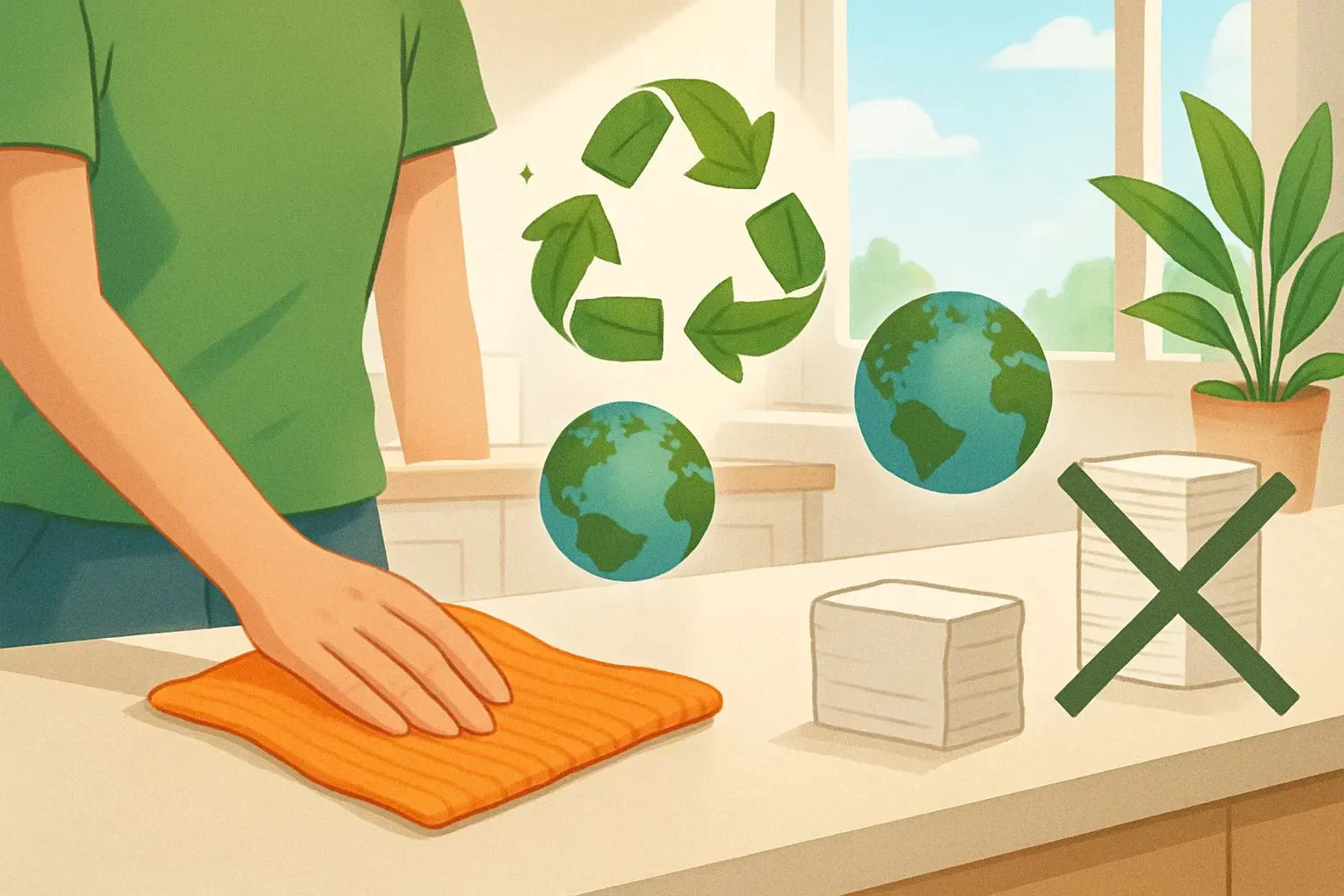
Paper towels come from trees. Most brands are not compostable once used. Millions of trees get cut down to make endless rolls. Used paper towels pile up in landfills.
Sponges are often made with plastic. They do not break down in the environment. A pile of old sponges can last for many years in a landfill.
Swedish dishcloths are usually made from natural materials. Many are compostable. After months of use, they return to nature rather than becoming trash. This makes them a better choice for people who care about the planet.
6. Convenience in Daily Life
People like easy cleaning. Swedish dishcloths can air dry on a hook or sink. They can sit on a counter and still stay fresh. Cleaning one is simple. Wash it with dishes or toss it in the laundry.
Paper towels are easy too, but they disappear fast. Buying them again and again takes time, money, and storage space.
Sponges scrub well, but rinsing and drying them is annoying. They sit wet for hours. They slide behind the sink. Many people forget where they placed them.
7. Texture and Feel
A Swedish dishcloth is soft to the touch. Once wet, it bends like a wipe and works like a towel. It holds its shape, stays gentle on surfaces, and does not scratch.
Paper towels feel dry and rough. Some break apart when wet. Sponges feel squishy. They work, but once they get old, they feel slimy.
8. Style and Fun
Many Swedish dishcloths come in bright colors and cute prints. Some show fruit, animals, kitchen tools, or funny sayings. Small touches like that make cleaning feel nicer.
Paper towels come in plain white or light patterns. They look the same in every kitchen. Sponges come in plain shapes and colors, although some brands offer patterns.
9. Long-Term Waste
Trash cans fill up quickly with paper towels after a single week. Stores sell giant packs, but shoppers return again soon.
Sponges pile up in landfills for years. They do not break apart in soil.
Swedish dishcloths break down after use. Many can be composted with fruit peels, coffee grounds, and eggshells. They leave almost nothing behind.
10. Kid-Friendly Cleaning
Families with kids deal with spills all the time. Juice, cereal, paint, and sticky hands can turn any day messy. A Swedish dishcloth helps parents clean up fast. Kids can use them too. They are soft, flexible, and easy to rinse.
Paper towels work for kid messes, but kids crumple sheet after sheet. It wastes a lot. Sponges can smear dirt rather than lift it. Kids often leave them in puddles, which makes them smell.
11. Pet Messes
Pets spill water, drop food, and track dirt into the house. Swedish dishcloths pick up water fast. They rinse clean after wiping paws or bowls.
Paper towels can handle pet messes, but fill the trash can in a day. Sponges are not great for pet fur. Hair sticks inside and stays there.
12. Glass and Shiny Surfaces
A Swedish dishcloth wipes mirrors, windows, and stainless steel without leaving lint. Glass looks clear, not streaky. It works indoors and outdoors.
Paper towels leave tiny fibers behind. They also smear cleaner if used too long. Sponges leave streaks on shiny surfaces.
13. Outdoor and Travel Use
A Swedish dishcloth can fit in a purse, lunch box, cooler, or glove box. It helps with picnics, camping, beach trips, and road snacks. After the trip, wash and reuse.
Paper towels blow away in the wind. They are bulky to store. Sponges are not useful outdoors. They need water and soap to work.
14. Kitchen Space
Swedish dishcloths take up almost no room. They store flat in a drawer or hang near the sink. Paper towel packs are large. Storing them takes space in pantry shelves or cabinets.
Sponges take up less space than paper towels, but many people keep several backups because of the smell.
Which Option Makes Life Easier?

A Swedish dishcloth handles daily cleaning without producing huge piles of waste. It lasts for months. It washes clean. It stays fresh.
Paper towels are quick but wasteful and costly over time.
Sponges scrub well, but smell and carry germs.
Real-Life Example
A family of four may use two or three rolls of paper towels each week. That can add up to about 100 to 150 rolls each year. All of that goes into the trash. A small set of Swedish dishcloths can replace that entire pile.
A person who washes dishes each day might buy a new sponge every two weeks. That is more than twenty sponges in a year. A Swedish dishcloth can replace most of them.
Final Thoughts
Homes everywhere look for cleaning tools that are cheap, strong, fresh, and gentle on the planet. Swedish dishcloths check every box. They clean well, wash well, and last longer than most people expect. Many families start with one or two and never go back.
|
Feature |
Swedish Dishcloth |
Paper Towels |
Sponge |
|
Can Be Reused |
Yes |
No |
Yes |
|
Time Before Replacement |
Months |
One use |
1 to 2 weeks |
|
Stays Fresh Without Smell |
Yes |
Yes |
No |
|
Cost Over Time |
Low |
High |
Medium |
|
Can Be Washed |
Yes |
No |
Sometimes |
|
Creates Trash |
Very Little |
A lot |
Some |
|
Good for Glass |
Yes |
Sometimes leaves lint |
Often streaks |
|
Good for Scrubbing |
Light to Medium |
Weak |
Strong |
Paper towels and sponges will always be sold in stores. Many households keep both on hand. Still, a Swedish dishcloth does more than either one. It picks up spills, wipes counters, shines glass, dries quickly, and saves money.
Cleaner kitchens, smaller trash piles, fewer bad smells, and less spending all come from a simple cloth that lasts. No fancy tricks. No complicated rules. Just grab, rinse, wipe, wash, and repeat. Swedish dishcloths make daily cleaning easier, fresher, and smarter for any household.


Leave a comment
This site is protected by hCaptcha and the hCaptcha Privacy Policy and Terms of Service apply.