
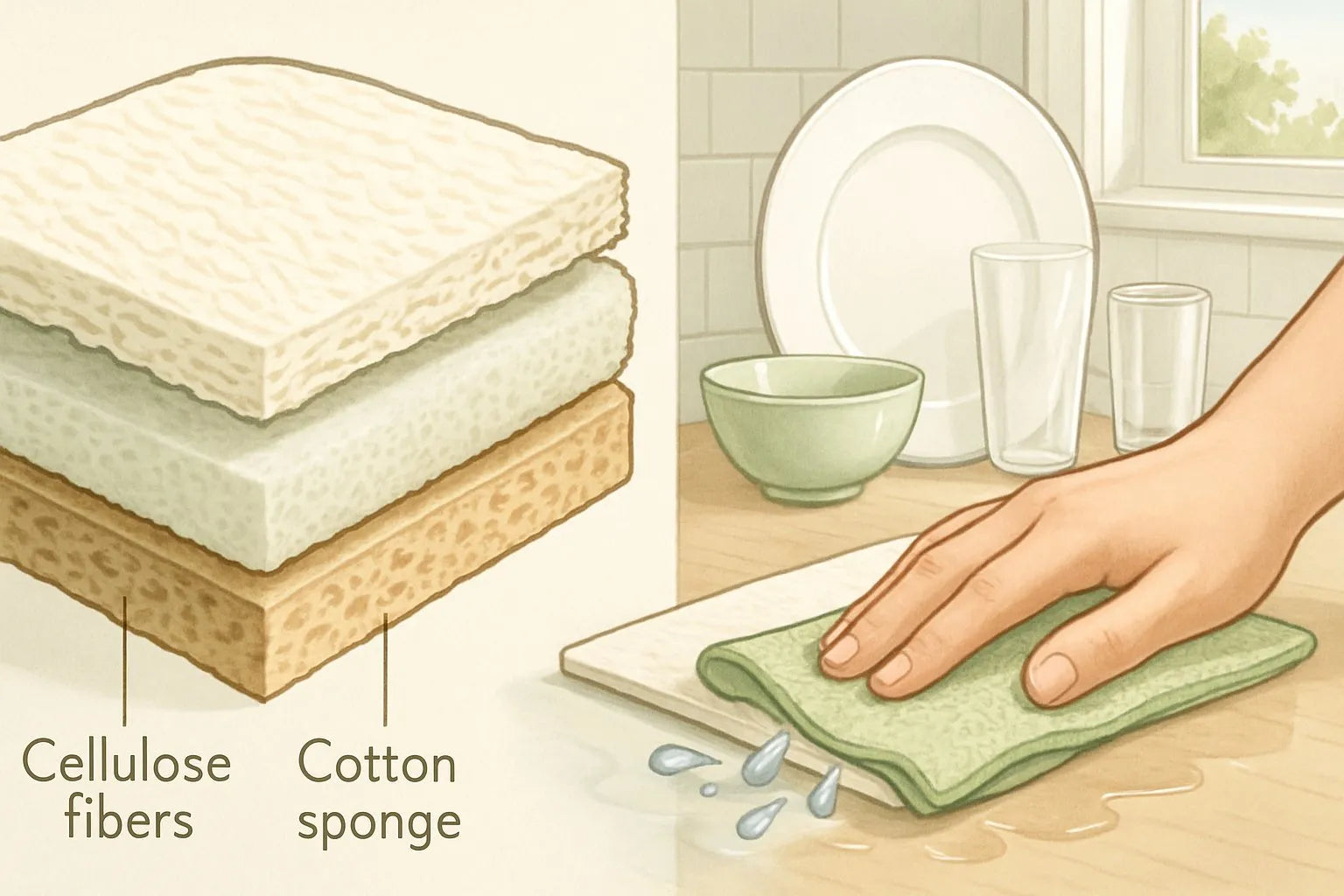
What Are Swedish Dishcloths?
Maybe you’ve noticed those bright, slim cleaning cloths at the store and wondered what the big deal is. Swedish dishcloths are super-absorbent cleaning towels made from wood pulp and cotton. They work kind of like a mashup between paper towels and sponges, but honestly, they last way longer and clean better than either.
Back in 1949, a Swedish engineer wanted a better way to clean without creating so much waste, so he came up with these. You can soak up 15 times the cloth’s weight in water, and each one can replace about 15 rolls of paper towels before it wears out.
Swedish dishcloths really shine because they combine awesome cleaning power with eco-friendly benefits.
You can use them all over the house, from wiping counters to scrubbing dishes. When they finally wear out after months, just toss them in the compost, and they’ll break down completely.
What Are Swedish Dishcloths Made Of and How Do They Work?
Swedish dishcloths blend natural materials with clever design. They can absorb up to 15 times their weight in liquid, which is kind of wild. These biodegradable cloths mix cellulose and cotton fibers, so they act like a cross between paper towels and sponges.
Composition: Cellulose and Cotton Blend
Each Swedish dishcloth contains 70% cellulose and 30% cotton. The cellulose comes from sustainably sourced wood pulp, which gets processed into those super-absorbent fibers.For the cotton part, manufacturers use leftover scraps from textile factories, basically, stuff that would’ve ended up in the trash.
When you put these materials together, you get a cloth with a unique texture. It feels stiff and almost cardboard-like when dry, so you can easily stash them in a drawer.
Once you wet the cloth, the fibers soften and puff up. The cellulose gives the cloth its absorption power, and the cotton keeps it strong so it doesn’t tear.
Both materials are totally natural and biodegradable. After months of use, you can toss the cloths in your compost, and they’ll break down in 8-12 weeks.
Origin and Scandinavian Design Roots
Swedish dishcloths first appeared in Sweden in the 1950s. Curt Lindquist, an engineer, invented them as a greener alternative to paper products. The design really reflects Scandinavian values, think sustainability and practicality. Swedish families quickly adopted them as a smart way to reduce waste.
The original idea focused on making reusable cleaning tools from natural materials, which lines up with Nordic traditions of environmental care.
Modern Swedish dishcloths stick to the same recipe and process. A lot are still made in Scandinavia using traditional methods.
You’ll notice the simple rectangular shape and neutral colors, classic minimalist Scandinavian design. Function matters way more than fancy looks here.
How Swedish Dishcloths Clean and Absorb
The cellulose fibers form these tiny pockets that trap liquids and crumbs. Each cloth can soak up up to 15 times its weight in water or spills. You just wet the cloth for a second to activate it. The stiff fibers soften and become flexible almost instantly.
Cotton fibers help with scrubbing stubborn spots. They add just enough friction to lift dirt without scratching your surfaces.
You can use Swedish dishcloths on all sorts of surfaces:
-
Glass and mirrors
-
Stainless steel appliances
-
Granite countertops
-
Ceramic tiles
Because they dry quickly, bacteria can’t really grow between uses. The cloths usually dry out fully within an hour.
If you rinse them well after cleaning, you’ll keep them fresh and ready for next time.
Comparison to Paper Towels and Sponges
Absorption Power:
-
Swedish dishcloths: 15x their weight
-
Paper towels: 3-4x their weight
-
Regular sponges: 10-12x their weight
Lifespan:
-
One Swedish dishcloth can take the place of 15 rolls of paper towels
-
You can reuse the same cloth over 200 times
-
They usually last about 9 months if you use them regularly
Environmental Impact: You can compost Swedish dishcloths at home, and they’ll disappear in a few months. Paper towels, on the other hand, create millions of tons of landfill waste every year.
Most sponges contain synthetic materials that never break down. Microfiber cloths shed plastic particles when washed.
Cost Effectiveness: Swedish dishcloths might seem pricey at first, but they pay for themselves fast. Paper towels just keep draining your wallet.
Most people save money when they switch to these reusable cloths. Since they last so long, you don’t need to buy them often.
Everyday Benefits and Eco-Friendly Impact

Swedish dishcloths soak up a ton and last up to 9 months if you treat them right. They’re totally compostable, and each one can replace 15 rolls of paper towels.
Key Features: Absorbency, Durability, and Quick Drying
Swedish dishcloths can absorb up to 15 times their weight in liquid. That makes cleaning up big messes a breeze, no drips, no streaks.
The blend of 70% plant cellulose and 30% cotton keeps them strong through hundreds of uses. They stay flexible when wet.
Quick-drying is a huge plus. The clothes dry out completely within hours, so bacteria and smells don’t have much of a chance.
You can wash each cloth over 200 times. Toss them in the dishwasher, the washing machine, or just wash by hand; they’ll keep working.
When dry, they stiffen up and get compact. You can store them in a drawer or hang them up without taking up much space.
Reducing Waste in the Kitchen
A single Swedish dishcloth can replace about 15 rolls of paper towels. That’s a huge step toward a zero-waste kitchen and less trash every day.
Paper towels generate over 254 million tons of waste each year. Switching to reusable cloths cuts your household waste way down.
You can use these cloths for more than just spills. They clean counters, windows, appliances, and even fresh veggies. Just make sure you keep them clean.
To keep things hygienic, use separate cloths for different jobs. One for dishes, one for counters, another for the bathroom. It’s easy.
Families who switch notice fewer store runs and less packaging waste in the trash.
Biodegradability and Compostability
Swedish dishcloths break down completely in a home compost bin within 8-12 weeks. No plastic bits or weird chemicals left behind.
The natural materials in them become nutrients for the soil. Honestly, it’s a nice closed loop, waste becomes plant food.
Unlike synthetic sponges, these cloths decompose safely back into the earth. Traditional sponges can hang around in landfills for centuries.
When your clothes finally wear out, just toss them in the compost. No need for special recycling or extra steps.
Their full biodegradability makes Swedish dishcloths a favorite for eco-friendly cleaning. They let you live greener without giving up cleaning power.
Cost Savings Over Time
Swedish dishcloths cost a little more upfront, but you make them back within a few months. Each one costs less than three good rolls of paper towels and lasts way longer.
Most families spend $50-100 a year on paper towels. You can get a set of Swedish dishcloths for around $20 and use them all year if you take care of them.
The cleaning power doesn’t fade as they age. You probably won’t need extra cleaning sprays or tools for most jobs.
Washing them costs almost nothing since they’re so small and light. Throw them in with your laundry or dishes, no big deal.
Buy in bulk to save even more. Multi-packs lower the per-cloth price and make sure you always have a clean one handy.
Using, Cleaning, and Caring for Swedish Dishcloths

Swedish dishcloths get super effective when you use and care for them properly. Wash them regularly, dish soap, machine wash, or microwave sanitizing all work. If you store them flat and keep them away from harsh chemicals or heat, they’ll stay fresh for months.
Best Ways to Use Swedish Dishcloths in Daily Cleaning
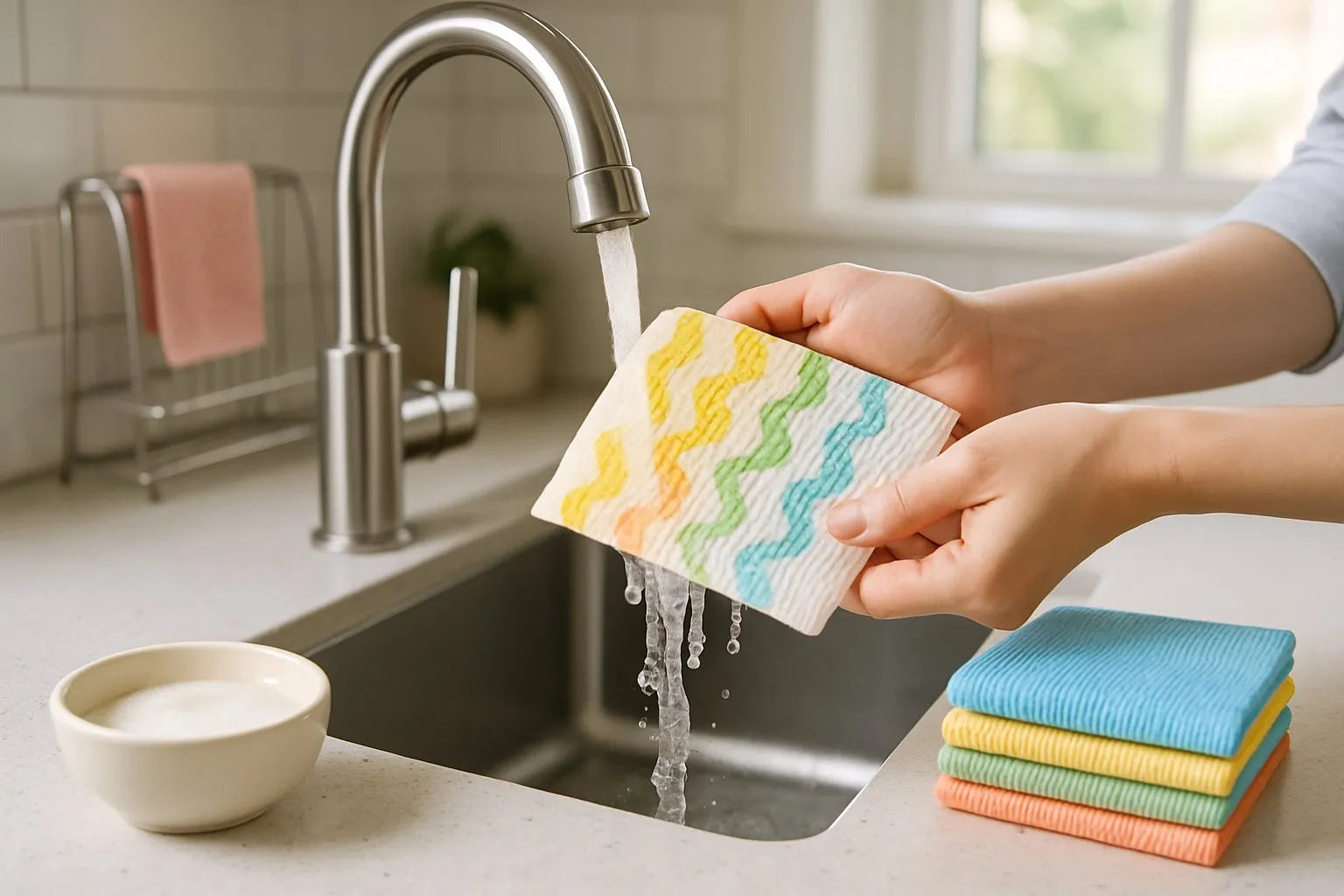
Wet your Swedish dishcloth before you start cleaning. It gets soft and flexible, which makes it perfect for wiping counters, soaking up spills, or washing dishes.
Most people just swap these in for paper towels. Since they can hold so much liquid, they’re great for drying dishes or cleaning up big messes.
Some everyday uses:
-
Wiping kitchen counters and surfaces
-
Cleaning mirrors and windows (no streaks!)
-
Dusting furniture and shelves
-
Washing fruits and veggies
-
Scrubbing dishes without scratching
They dry fast between tasks, so bacteria don’t have much time to grow. Rinse them after each use to remove crumbs and soap.
If you need to scrub, go for it. The clothes hold up well, even when wet.
How to Properly Clean and Maintain Your Dishcloths
Wash your Swedish dishcloths at least twice a week if you use them often. You’ve got a few good cleaning options. Hand washing is simple: just rinse with cold water, work in some dish soap, rinse again, and hang to dry.
Machine washing works too. Use cold or warm water on a gentle cycle. Don’t use fabric softener, or they’ll lose their absorbency. Dishwasher cleaning is easy. Put them on the top rack during a normal cycle, but pull them out before the heat-dry to avoid shrinking.
Microwave sanitizing works in a pinch, just microwave a damp cloth for 60-90 seconds. That’ll kill germs. For really dirty clothes, boil them for 3-5 minutes.
Just don’t do this too often, or the fibers might wear out quicker.
Tips to Maximize Longevity and Maintain Hygiene
If you take care of them, Swedish dishcloths last 6-12 months. Always air dry, never put them in the dryer. Heat messes with the fibers. How you store them matters. Try not to fold or crease them too much, or they might lose their shape and won’t work as well. Store them flat in a dry place.
Skip harsh chemicals like bleach. They’ll break down the fibers and ruin the cloth. Use gentle, eco-friendly soaps instead.
Rinse the cloth right after cleaning up raw meat or anything with a strong smell. That helps prevent stains and odors.
Swap out your clothes when they start falling apart or won’t lose a bad, even after washing. A good cloth should feel soft when wet and keep its shape. Rotate a few pieces of clothing to let each one dry fully between uses.

Leave a comment
This site is protected by hCaptcha and the hCaptcha Privacy Policy and Terms of Service apply.